
Premium Reverse Twist Barbed Wire – High-Tensile Galvanized Steel Dual-Strand Barriers
When engineering high-volume linear fencing lines across thousands of hectares, traditional single-direction twisted wires face a major structural defect: they capture immense torsional internal stress, causing loops to unwind, barbs to slip laterally, and lines to sag under extreme thermal cycles. Our premier Reverse Twist Barbed Wire structures deliver the ultimate metallurgical answer to permanent territorial boundary defense. Fabricated using heavy automated machinery that continuously alternates the twisting direction of the dual carrier strands, these high-tensile fences possess zero internal torque. This ensures an exceptionally straight, rigid, and maintenance-free line layout across any challenging landscape profile.
Advanced Metallurgical Mechanics of Reverse Twist Protective Fences
Primary Technical Performance Attributes & Engineering Highlights:
- Zero-Torque Linear Perfection: Alternating twist mechanics balance geometric forces, eliminating the wire’s natural tendency to curl or buckle during rapid unspooling field deployment.
- Immovable Anti-Slip Barb Interlock: 4-point sharp barbs are tightly positioned right at the reversing point of the double strands, stopping malicious attempts to slide or cluster the barbs apart.
- Deep sacrifical Galvanized Shell: Thickly submerged in an ISO 1461 hot-dip zinc matrix to ensure complete zinc coverage that halts rust in high-humidity equatorial farmlands or salt-heavy seaports.
- High-Tensile Structural Efficiency: Using thinner, specialized high-carbon wires delivers identical structural breaking loads as thicker soft low-carbon variants while offering longer meter yields per ton.
Technical Specifications & Blueprint Reference Matrix
| Product Code | Strand Wire Diameter (mm) | Barb Wire Diameter (mm) | Barb Spacing Pitch | Tensile Strength Rating | Zinc Coating Mass | Standard Length / Spool |
|---|---|---|---|---|---|---|
| RTBW-HT16-500 | 1.6 mm / 1.6 mm Dual | 1.5 mm | 100 mm pitch | ≥ 1100 N/mm² | ISO 1461 ≥ 240 g/m² | 500 Meters (~23 kg) |
| RTBW-HT20-400 | 2.0 mm / 2.0 mm Dual | 1.8 mm | 75 mm Dense Pitch | ≥ 1200 N/mm² | Heavy HDG ≥ 260 g/m² | 400 Meters (~35 kg) |
| RTBW-ST25-250 | 2.5 mm / 2.5 mm Soft | 2.0 mm | 125 mm Standard | 400 – 550 N/mm² | 60 g/m² Commercial | 250 Meters (~28 kg) |
| RTBW-SS34-300 | 2.0 mm / 2.0 mm Dual | 1.8 mm Stainless | 100 mm pitch | ≥ 650 N/mm² | Bright Electro-Polished | 300 Meters (~24 kg) |
All-Terrain Adaptability & Extensive Frontier Layouts
Field engineering with our linear Reverse Twist Barbed Wire spools is highly adaptive across rolling topographies and severe desert zones. Because the alternating twist layout completely stops systemic wire curling and dangerous whipping spring-back during unpacking, on-site labor crews can run and pull kilometers of wire fatigue-free. It can be arrayed into heavy five-strand ranch enclosures or fixed seamlessly onto top Y-brackets of solid concrete security walls, forming an unbroken physical area-denial matrix that stands rigid under severe wind forces and structural vibrations.
B2B Supply Chains, Spool Packaging & Container Loading Efficiencies
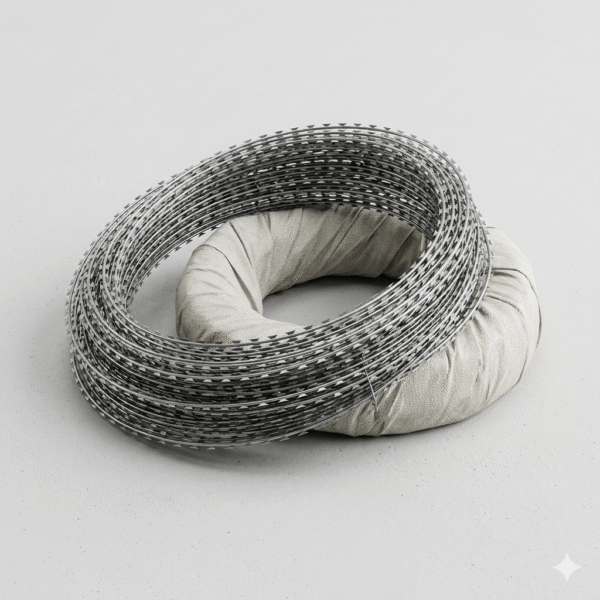
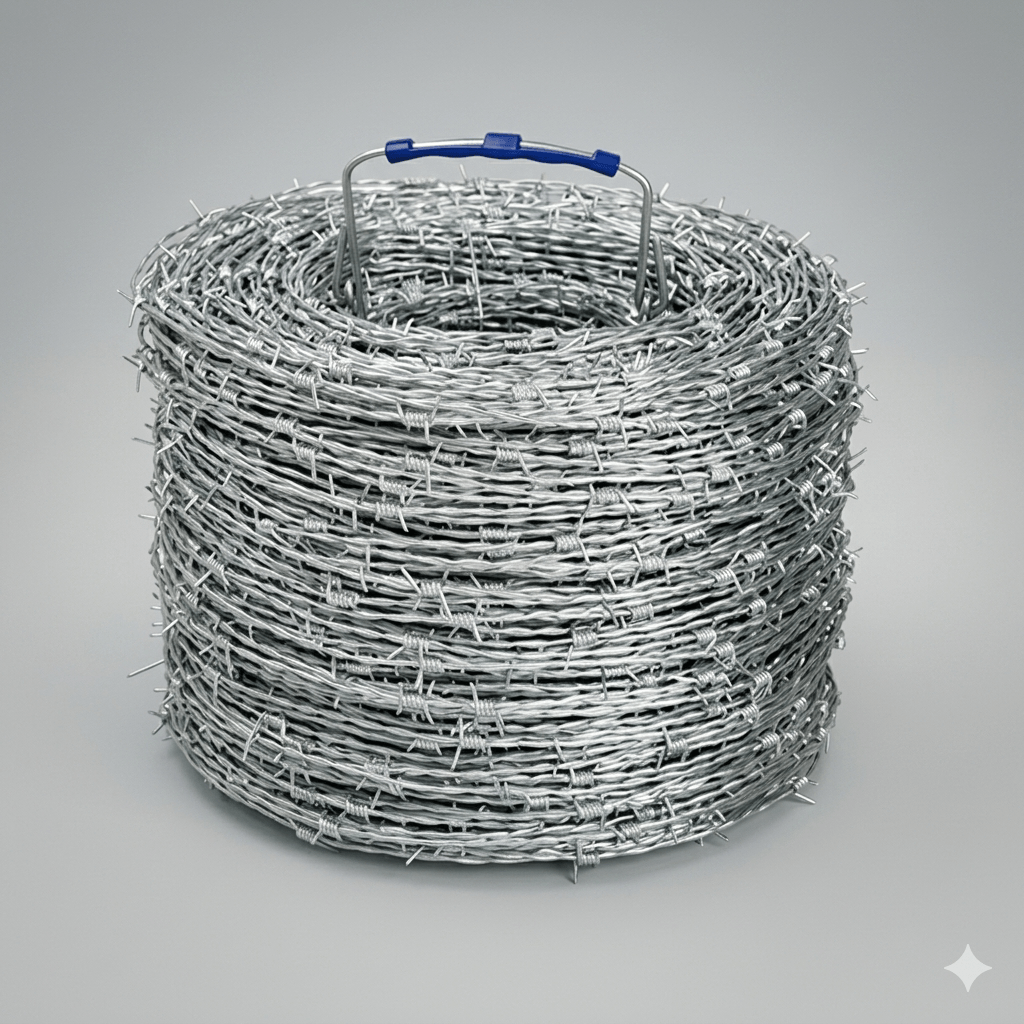
Operating as an elite manufacturing partner for international architectural buying cooperatives, federal infrastructure contractors, and high-volume hardware distributors, we guarantee immaculate logistical execution. Loose wire coils deform easily and break box boundaries during long multi-port intercontinental ocean transit routes. To eliminate this issue, our reverse-twisted wire reels are wound around reinforced steel center spindles or robust fumigated wooden spools featuring plastic handle inserts. Packed tightly on heavy pallets and wrapped with continuous stretch protective film, our shipments maximize container weight distribution, ensuring immaculate, rust-free inventory arrival.
Frequently Asked Questions (FAQ)
Q1: What is the main structural advantage of reverse twist barbed wire over traditional single-direction twisted wire?
A: Traditional single-twist wire stores high internal torsional torque, which causes the wire to curl up like a spring during installation and sag significantly during summer heat waves. Reverse twist barbed wire continuously changes its weaving direction between knots, balancing out internal material forces. This prevents continuous fence sagging and guarantees a perfectly flat, straight line run over long multi-post expanses.
Q2: Why do you specify a high-tensile rating of 1100+ N/mm² for your reverse twisted steel strands?
A: Soft low-carbon steel lines break easily under heavy physical impact from livestock or intruders and can be cut rapidly with simple hand pliers. Our high-tensile line utilizes a proprietary carbon wire profile. This high-tensile design provides massive breaking loads using a thinner wire gauge, which drastically lowers the overall steel weight and material cost per meter while shattering standard manual wire cutters.
Q3: How does your deep hot-dipped galvanized coating prevent early rusting at the wire interlocking reversing points?
A: Standard electro-galvanized wires rust rapidly because water gets trapped in the tight twist joints. Our wire undergoes a deep molten zinc bath process (ISO 1461 compliant) that forces liquid zinc deep into the twisted cavities, applying a uniform protection layer exceeding 240g/m². This heavy coating provides sacrificial cathodic protection that stops rust from developing at joint contact points.
Q4: What is your peak factory manufacturing lead time and standard MOQ for a full 20ft container procurement?
A: Our standard Minimum Order Quantity (MOQ) stands at 5 metric tons per specifications batch. Driven by our continuous automated high-speed drawing, stamping, and reverse-winding lines, we can execute a complete 25-ton full 20GP container manufacturing cycle within 12 working days, guaranteeing strict alignment with your project schedules.
Get Factory-Direct Wholesale Price & Free Samples
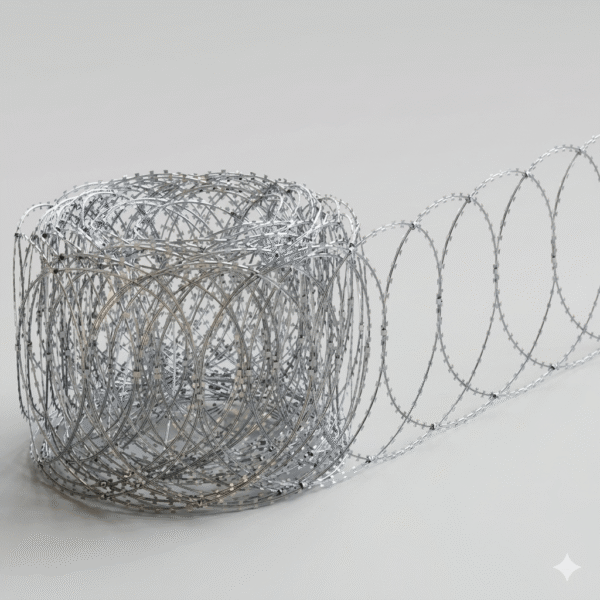
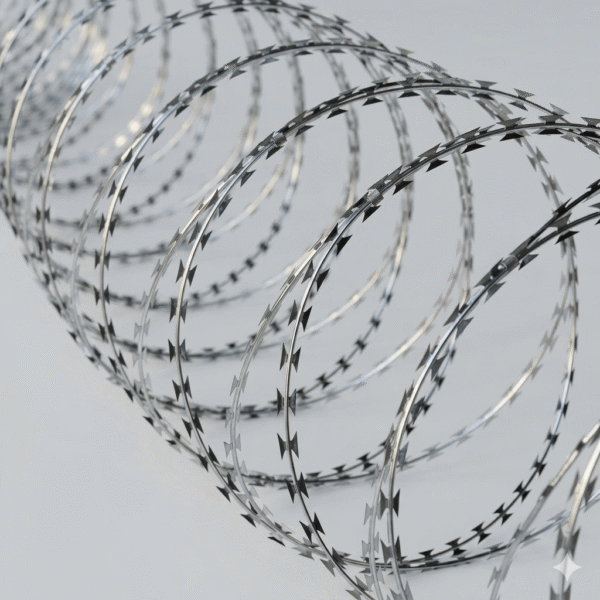
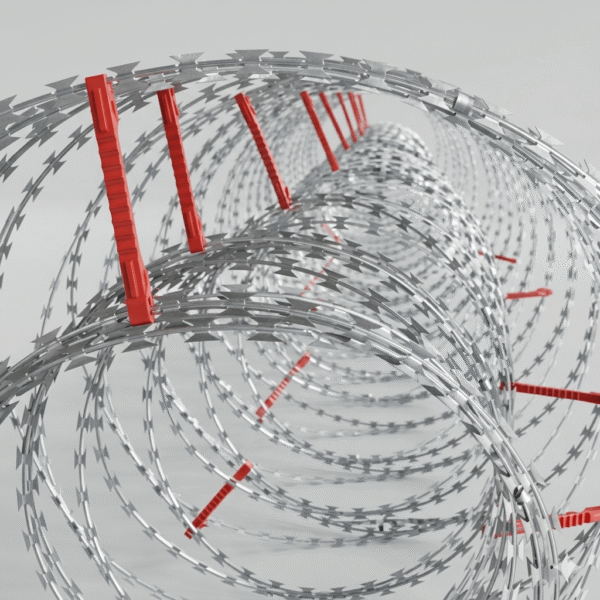
Are you searching for a stable, high-capacity Chinese manufacturer to optimize your industrial Vinyl Coated Razor Wire procurement costs? Partner with our ISO-certified facility to secure premium-grade, corrosion-resistant anti-climb razor wire coils and high-tensile reverse twist barbed wire, providing a seamless global supply chain service designed to maximize your perimeter protection and market competitiveness.
- Flexible Tiered Pricing: We offer massive volume-based bulk discounts alongside highly competitive FOB, CIF, and CFR quotes tailored for full container loads (20GP). This rigid cost-control approach is structurally designed to significantly boost your local security fencing distribution margins or commercial reverse twist barbed wire re-selling profitability.
- 100% Free Samples: Pre-qualification physical Vinyl Coated Razor Wire testing samples—along with precision-crafted reverse twist barbed wire samples—can be dispatched immediately to your facility. This allows your project engineering team to complete local laboratory core wire diameter verification, vinyl coating adhesion audits, or rigorous tension and salt spray corrosion testing before placing a commercial tender order.
- Guaranteed Fast Lead Time: Our infrastructure features advanced automated razor blade punching presses, high-speed coil wrapping production lines, and heavy-duty reverse twist barbed wire weaving machines. Backed by a permanent, massive raw material galvanized steel wire and premium UV-stabilized vinyl resin inventory, we guarantee prompt manufacturing turnaround and strict adherence to your global deployment schedules.
- Customized Packaging: To thoroughly eliminate shipping vulnerabilities and handling hazards associated with sharp, springy wire coils, we utilize specialized dual-layer protective packing. The interior of the compressed coils is wrapped with waterproof paper, while the exterior (including wooden spools of reverse twist barbed wire) is securely bound in rugged, anti-puncture woven bags or heavy-duty cartons. This complete armor system guarantees zero vinyl coating scratches, zero rust from salty sea air, and maximum safety during long-distance maritime transit and port unloading.