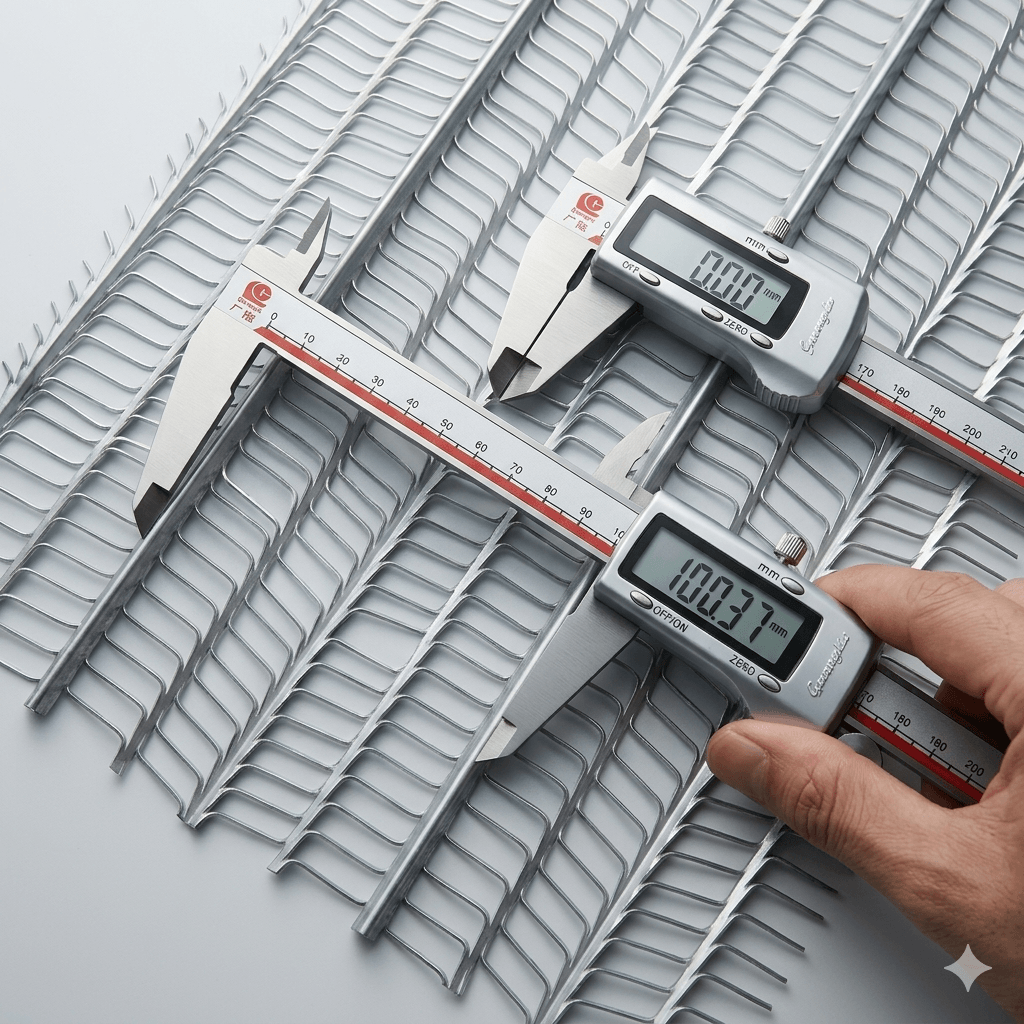

Industrial Galvanized Flat Rib Lath for Heavy-Duty Plastering Backplates & Stucco Reinforcement
In high-end commercial tenant fit-outs, heavy architectural stucco placements, and modern fireproofing structural partition wall linings, deploying flimsy wire screens or standard non-ribbed meshes often induces severe mechanical failures. Traditional wire substrates easily experience mid-span sagging, layer delamination, and progressive plaster shrinkage cracking under rapid trowel pressures. Our professional-grade Flat Rib Lath provides an advanced, unyielding engineering solution meticulously engineered to overcome these costly installation vulnerabilities. Cold-formed from continuous high-tensile hot-dip galvanized steel foils, this specialized building material integrates 4mm deep low-profile longitudinal V-ribs that dramatically stiffen the metal canvas, enabling long-span stud frame layouts without surface buckling or warping errors.
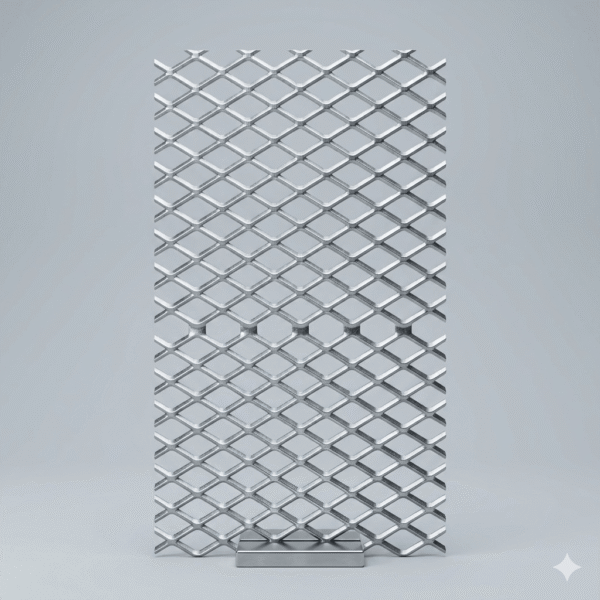
As a leading globally certified first-tier manufacturer of industrial building components, we process our rib mesh through high-precision automated rolling networks. The herringbone open apertures between adjacent 4mm rib reinforcement tracks are carefully size-calibrated to optimize fluid mortar bonding dynamics. During trowel application, wet gypsum plaster, lime mortar, or heavy structural cement mixtures smoothly envelop the metal strands, creating a dense mechanical keying pattern on the backside wall. This naturally locks the scratch coat together with zero honeycombing or excessive drop waste, saving hours of site cleaning labor. From indoor column wrapping and partition wall backings to massive exterior cladding insulation barriers, our flat rib lath delivers unmatched structural safety and elite surface flatness.
Advanced Engineering Performance Advantages of Our Plastering Rib Mesh
1. Ultimate Spanning Rigidity with Low-Profile Thickness
Traditional plaster backplates require closely spaced framing studs to avoid mid-panel bowing. The parallel 4mm flat ribs on our lath sheets provide sufficient section modulus to span across extended wood or light-gauge metal studs up to 600mm apart, saving substantial framing material costs without requiring a thicker plaster layer.
2. High Mortar Grip & Zero Material Drop Waste
Standard mesh arrays often struggle with severe mortar dropouts when applied overhead to ceilings. The optimized herringbone slit geometry of our flat rib lath functions like thousands of microscopic shelves, holding the heavy mortar mixture firmly in place. This high retention rate minimizes floor waste drops and speeds up scratching coat cycles by up to 35%.
3. Structural Stress Redistribution & Anti-Cracking Security
Buildings naturally experience continuous micro-settlements and minor thermal expansions that cause drywall joints to crack. The high tensile strength of our expanded galvanized steel framework evenly redistributes these localized stresses across the entire wall face, providing excellent prevention against hair-line cracking over decades of building use.
Technical Specifications & Standard Plastering Matrices
| Model Code SKU | Material Type Grade | Foil Thickness (mm) | Rib Depth (Height) | Rib Center Spacing | Approx. Weight per Sqm |
|---|---|---|---|---|---|
| FRL-GI-25 | Hot-Dip Galvanized Steel | 0.25 mm | 4.0 mm | 100 mm | 0.85 kg / m² |
| FRL-GI-30 | Hot-Dip Galvanized Steel | 0.30 mm | 4.0 mm | 100 mm | 1.11 kg / m² |
| FRL-GI-35 | Heavy Structural Galvanized | 0.35 mm | 4.0 mm | 100 mm | 1.28 kg / m² |
| FRL-GI-40 | Extra Premium Plaster Grade | 0.40 mm | 4.0 mm | 100 mm | 1.45 kg / m² |
Primary Architectural Construction Deployments
Our flat ribbed architectural meshes are trusted components widely deployed within versatile interior and exterior building systems:
- High-End Interior Wall Plastering: Deployed over concrete blocks, lightweight block walls, and brickwork joins to establish an ultra-stable background skin for premium wall finishes.
- Exterior Stucco & EIFS Systems: Installed across exterior structural thermal insulation boards to securely hold heavy outdoor weather-resistant cement stucco coats.
- Structural Fireproofing Claddings: Wrapped tightly around structural steel I-beams, ventilation ducts, and maritime bulkheads to support thick vermiculite fire-barrier coatings.
- Decorative Curved Ceilings & Arches: Selected by specialized commercial interior fit-out teams to easily shape custom domes, detailed cornices, and curved partition walls with high structural strength.
Professional Installation & Mechanical Fixing Steps
To eliminate surface rattling and achieve maximum plaster bonding safety across wide spans, ensure field crews adhere to these steps:
- Rib Orientation Placement: Always arrange the flat rib lath sheets with the apex of the 4mm longitudinal V-rib tracks pressed directly against the supporting wood studs or metal channels.
- Mechanical Post Fastening: Secure panels to metal studs using high-grade self-tapping screws with washers, or attach them to wood framing with heavy-duty 25mm roofing staples spaced every 150mm along the rib lines.
- Panel Edge Overlapping: When joining flanking panels together, ensure a secure horizontal overlap of at least one full rib channel. End joints must achieve a minimum longitudinal overlap length of 50mm, with overlap points tied tightly using 18-gauge wire.
- Plaster Troweling Control: Apply the initial scratch coat at a slight angle relative to the parallel rib lines. This technique helps pack the mortar completely beneath the herringbone apertures for a solid mechanical lock.
Bulk Export Packing, Quality Auditing & Seaworthy Anti-Rust Logistics
Fulfilling large-scale international contract tenders for regional hardware home-improvement supermarkets, national ministries of public housing, and large commercial building material distributors demands strict quality tracking. At our specialized automated metal expanding complex, every run of flat ribbed metal lath panels passes through computerized caliber tests to confirm base metal thicknesses, multi-point electronic scale weight logs, and non-destructive digital zinc coating thickness meters before moving to the packaging bay.
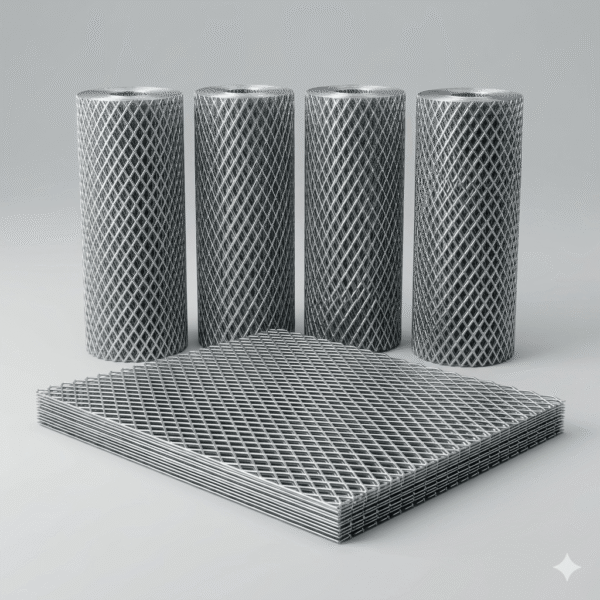
To prevent sheet bending or crushed rib distortions during trans-oceanic container journeys, panels are tightly nested and compressed into dense, interlocking blocks of 20 to 50 sheets using automatic heavy strapping bands. These bundles are stacked tightly on reinforced, ISPM-15 compliant timber pallets or structural steel base runners, protected with extra-thick edge guards, and tightly sealed in multi-layer weather-resistant plastic stretch film. Built-in forklift channels under the skid tracks allow for smooth container terminal loading and rapid warehouse off-loading, ensuring your formwork cargo arrives in pristine condition.
Frequently Asked Questions (FAQ)
Q1: What is the primary functional difference between Flat Rib Lath (4mm rib) and standard Diamond Mesh (non-ribbed lath)?
A1: Standard Diamond Mesh features a completely flat, non-ribbed surface that has zero longitudinal load capacity. It is used almost exclusively for thin repair patches over dense wood block joins or brick joints. Flat Rib Lath integrates parallel 4mm deep V-rib channels that provide substantial bending stiffness. This enables the metal sheets to comfortably span across extended hollow light-gauge metal studs up to 600mm apart without bowing under the weight of wet plaster.
Q2: When should I choose Flat Rib Lath (4mm rib) over High Rib Lath (21mm rib) for construction projects?
A2: Flat Rib Lath (4mm rib) is designed primarily to serve as a low-profile plastering backdrop for internal partition walls, lightweight stucco setups, and decorative gypsum ceilings, keeping the total plaster thickness minimal. High Rib Lath (21mm rib) is an extra-heavy-duty material engineered exclusively as a permanent, leave-in formwork solution to contain massive hydrostatic fluid pressures during deep civil concrete foundation pours and tunnel lining joints.
Q3: Does the heavily alkaline wet cement mix trigger early rusting or chemical degradation across your galvanized lath sheets?
A3: No, absolutely not. Wet cement mortar matrices possess a high pH environment that can easily discolor or oxidize unprotected low-grade steels. To prevent this chemical reaction, we exclusively process first-tier hot-dip galvanized steel foils with a certified tight zinc layer composition. This protection forms a durable chemical passivity layer, preventing rust or bubbling throughout the moisture curing cycle and securing decades of structural life.
Q4: What is the typical factory minimum order quantity (MOQ) for custom-weight wholesale orders?
A4: For our standard active warehouse sheet sizes maintained in raw stock (such as common 0.30mm gauge sheets at 2.5m or 3.0m lengths), we offer highly flexible project MOQs starting at 1,000 sheets. For specialized customized sheet thicknesses, premium material grades, or unique palletization criteria, our automated high-speed cold slitting production lines require a minimum volume run of 3,000 sheets or a single combined full 20ft ocean container allocation.
Get Factory-Direct Wholesale Price & Free Samples
Are you searching for a stable, high-capacity Chinese manufacturer to optimize your Flat Rib Lath procurement costs? Partner with us to enjoy premium bright, smooth-finish, and perfectly flat quality compliant with international plastering and stucco reinforcement standards and seamless global supply chain service.
- Flexible Tiered Pricing: Massive discounts and competitive FOB/CIF/CFR quotes for full container loads (20GP).
- 100% Free Samples: Quality, dimensional flatness, and rib-rigidity testing samples available for your local concrete formwork, joint construction project, or distribution verification.
- Guaranteed Fast Lead Time: Advanced automated heavy-duty expanding and deep-rib profiling lines ensure prompt manufacturing and on-time shipment of your flat rib lath.
- Customized Packaging: Marine-grade rust-proof dual packing (waterproof paper inside + PE shrink film outside) with heavy-duty reinforced pallets to prevent transit damage, rib distortion, and bundle bending.